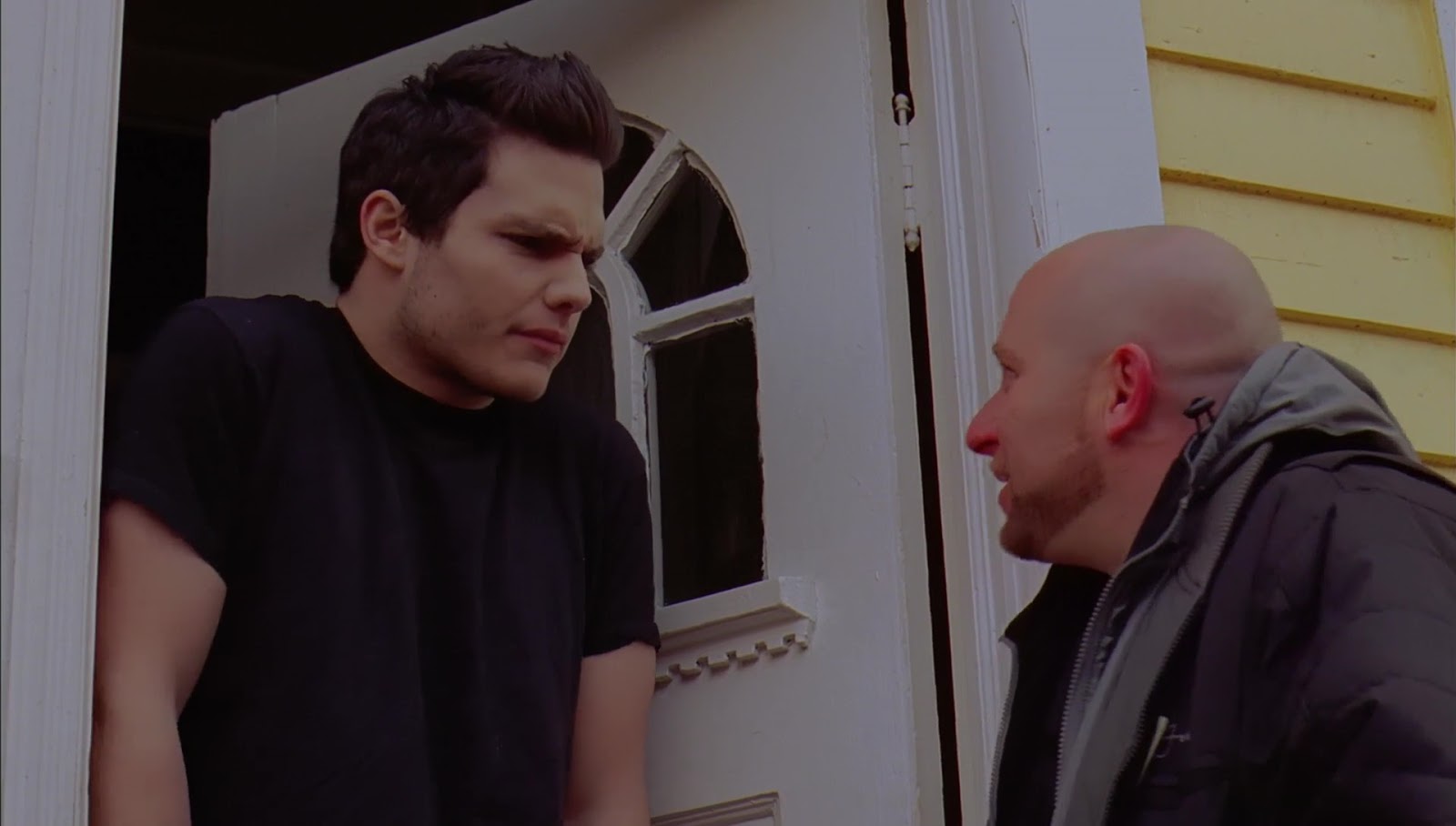
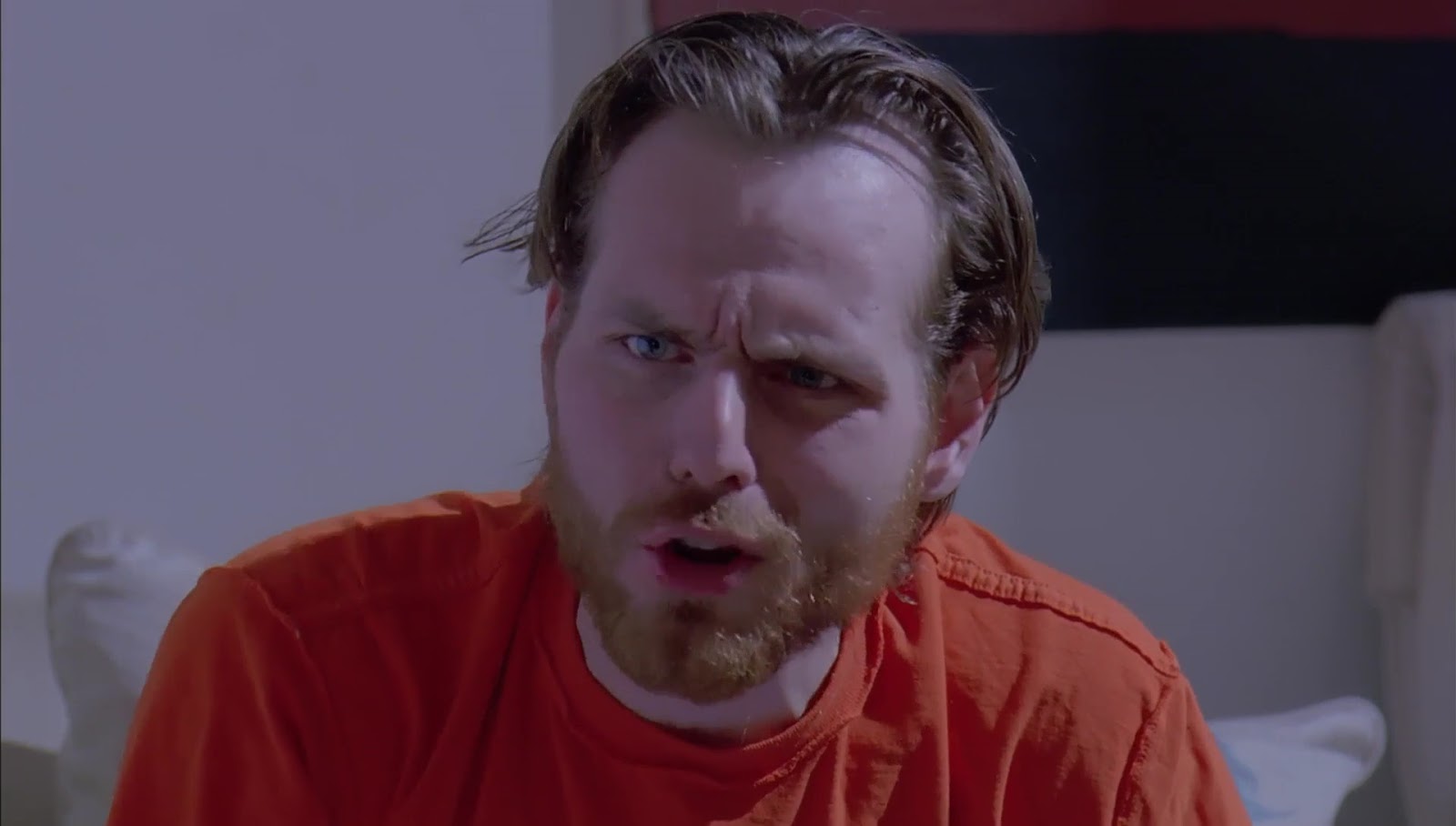
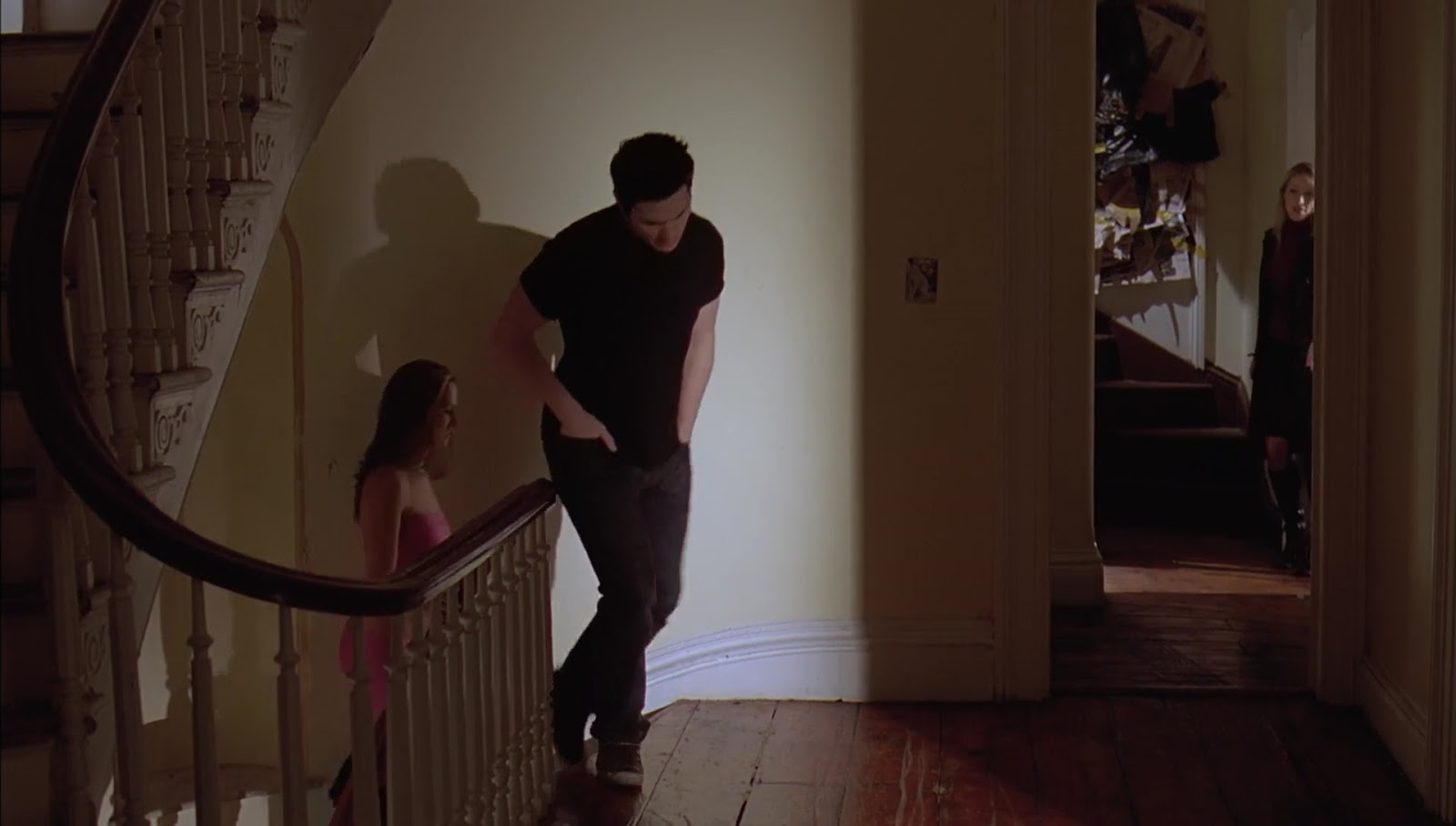
Bad Biology is one of the most twisted, depraved, and
grotesquely brilliant films I’ve ever seen. It is also one of two films that
left me wondering What the hell did I just watch...? by the time the
credits rolled (the first being Peter Jackson’s completely off-the-wall Bad
Taste).
Bad Biology is cult maestro Frank Henenlotter’s
fluid-drenched return to the art of filmmaking after well over a decade. By the
time he’d completed 1991’s Basket Case 3, it was clear the business had
taken a drastic turn. Midnight movies were now a thing of the past and he could
no longer produce the kinds of scripts he wanted. So, he made a quiet departure
after a handful of screenplays and treatments were rejected by industry
executives.
It wasn’t until the mid ‘00s when rapper R.A. the Rugged Man
successfully persuaded Frank to not only come back, but to collaborate on a
project. Their first attempt, Sick in the Head, never quite got off the
ground due to lack of financing and was ultimately turned into a short novel
published by Comet Press. Bad Biology, shot on 35mm with a budget of
just over $1 million, was a production rife with difficulty, including fire,
damaged sets, unreliable crew members, and Frank’s prostate cancer diagnosis.
Each morning, he’d report to set straight from chemotherapy and credits the
project as one that, at the end of the day, saved his life. With the many, many
headaches and complications attached to bringing one’s vision to the silver
screen, Frank literally had no time to worry about his health. With so much
riding on Bad Biology, there was no other option but to get the movie in
the can.
And get it in the can he did.
Scroll down for 379 high-quality screencaps taken from
Shriek Show’s beautifully polished Blu ray. You’re welcome, ya buncha deviants.
“You think you’re some sort of a god? Well, you’re only a
god in here. Out there, in the real world, you’re nothing but another crazy
fuck.”
Another Roger Corman movie, you say? Well, this is B-Movie
Bonanza, and Roger’s Concorde/New Horizons films have contributed greatly
to the direct-to-video market. Much to my chagrin, the golden era, when these
cheapies lined video store shelves, has long-since passed. As recent
documentaries like Rewind This! and Adjust Your Tracking have
shown via emulsion-lined screens, nothing quite compares to VHS nostalgia. Oh
how I miss picking up a dust-coated New Horizons Home Video sleeve to closely
observe those lurid images of busty young actresses in varying stages of
undress (as Corman always said, nudity is the cheapest special effect).
Those moments following this almost hypnotic state, when I’d flip to peruse a
hastily cranked-out synopsis of a thinly-veiled plot, was always the
icing on the cake, especially when said synopsis contained typographical
errors, or said cake featured stills of big-boobied actresses not even in the
movie. The format may be long gone, but the movies themselves live on—if not on
YouTube or Hulu or Netflix, then right here in my cozy little corner of the
Interwebz.
Most often, it’s quite clear that the scripts for Corman’s
expansive collection were cranked-out in, at most, a weekend. The excessive
stock footage, predictable plot twists, and questionable caracter development
give those away each and every time. But on rare occasions, I’d find myself
watching a clearly bad film with some semblance of a compelling and/or original
premise buried beneath poor direction, sloppy editing, thrown-together sets,
and, of course, an abundance of nudity. Such is the case with The Coroner.
The plot centers around a prolific serial killer, who
happens to be L.A.’s chief medical examiner. He destroys all evidence of his
crimes while revisiting his victims as they lay upon a morgue slab. Our villain
(Dean St. Louis) doesn’t choose victims at random, however. He specifically
targets beautiful young women who’ve recently attempted suicide, but failed. He
then stalks and holds them captive in a chamber of horrors, where he tortures
and humiliates them before ultimately succeeding where they couldn’t. This
demented hobby always takes place with a camcorder well within reach, so our
scalpel-wielding madman can relive the butchery over and over.
Meanwhile, Emma Santiago (Jane Longnecker), an ill-mannered,
high-strung attorney with a slightly atypical approach when it comes to
cross-examining unreliable witnesses, finds herself the next victim in this
string of brutal slayins. Fortunately, she is able to escape before she ends up
in the morgue with the rest of The Coroner’s mutilated corpses. Unfortunately,
no one believes her elaborate story. As detectives come to find, Emma has a
history of mental instability to accompany her over-the-top court room antics,
whereas our slice-n-dice medical examiner is a pillar of society with a healthy
and longstanding rapport with several members of the police force, including
the detectives investigating Emma’s claims.
Though The Coroner is a fairly interesting concept,
the screenplay has a number of things working against it. First and foremost,
it was produced by Concorde/New Horizons. Second, it was obviously tweaked to
include unnecessary scenes that don’t exactly go with the film, all of them
containing gratuitous nudity. Third, while the performances aren’t terrible
(though Longnecker does do a fair bit of chewing the scenery) they’re
rather inconsistent. Worst of all, The Coroner contains as much, if not
more, stock footage as the 1996 Maria Ford quickie Strip for Action.
Snippets of screaming actresses from completely unrelated films, like The
Slumber Party Massacre and Sorority House Massacre II are randomly
inserted throughout the movie to serve as, I can only assume, flashback footage
from The Coroner’s previous slayings. It’s quite noticeable and even a
non-Corman devotee would more than likely pick up on it immediately. Oh and I
should probably mention the score, which was recycled from a handful of other
Concorde productions.
I’m by no means implying The Coroner could’ve been
something spectacular, but with a little dialogue polish, a bigger budget, and
a few more seasoned actors, it definitely could’ve been something better.
Alas, it is what it is and so it remains a movie I enjoy not because it’s good,
but because it’s oh-so-delightfully bad. As always, you’re welcome to watch
along with me (I believe it’s pretty easy to track down on YouTube and other
streaming sites). I, however, used the original Concorde DVD, which runs
1:14:07.
Disclaimer: I often ramble nonsensically
while struggling for material to fill the running time. On occasion, I
unwittingly head off in some pretty kooky directions. This time, I gave
something of a tutorial on how to correctly slit one’s wrists. I don’t know
this from personal experience and the topic by no means appears randomly
(several of the women in the film attempt suicide using this method). My
thoughts, comments, opinions, and ramblings on the subject are NOT meant
to inspire or encourage anyone to take a sharp implement to their own flesh.
It’s just me, as per usual, acting like a total jackass. Now, as Fred Olen Ray
says in the opening disclaimer for Hollywood Chainsaw Hookers, my
conscience is clear.
Since Eli Roth has spent the past fifteen years spewing the
most purile, amateurishly cringe-worthy dialogue set to screen, choosing a
headlining quote for this episode was no easy feat. Also, the preceding
statement is a prime example of the direction B-Movie Bonanza has taken
over the the past few years. When I started the blog back in 2014, I swore I
wouldn’t make a mockery of the films I commentate. I repeatedly promised that
this wasn’t meant to be another RiffTrax, but my way of spreading the
love for these, my favorite celluloid gems. I promised I wouldn’t nitpick or
obnoxiously make mention of plotholes. That I would only share stories of how
the movies enriched my life and made those teenage years locked in my bedroom a
little more tolerable. Somehow, things veered slightly off-course.
While I wouldn’t say I’ve been ripping the movies to shreds,
I have been having a little more fun with them than I’d originally
intended. I’ve addressed senseless subplots, poor acting, redundant storylines,
and certain companies who’ve spent years slapping together movies comprised
primarily of stock footage, not to mention laughing my ass off at my own
less-than-clever quips.
With Cabin Fever, I couldn’t resist poking fun at the
unseasoned writing style of Mr. Eli Roth. But come on. When you consistently
pen characters who walk around rolling their eyes and remarking on how “gay”
everything is, you’re making yourself a prime target for negative criticism and
ridicule. I also do a fair amount of analyzing (sometimes over-analyzing)
elements of the highly debatable plot. Doing these little commentaries has
truly made me look at the films in an entirely different way and I often find
myself peeling back layer after layer, thinking aloud as I try to discern the
characters’ motivations, a truly pointless endeavor when it comes to movies
like Cabin Fever. That said, I hope you have as much fun listening to me
dissect one of the best so-ridiculously-bad-it’s-good movies of the early ‘00s
as I did recording this episode.
Please note: it’s imperative that you use the director’s cut
Blu ray edition if you’d like to watch along. The original DVD released by
Lions Gate will ruin the experience, and what an experience it is listening to
me ramble on for 1:37:47 about these cookie-cutter characters and the giant
brick of Swiss cheese Roth calls a plot.